
Due Diligence That Was NOT Diligent Enough
 By campground-admin February 23, 2026
 By Erik Gothberg, Senior Consultant – Campground Consulting Group, LLC
Imagine opening a brand-new RV park or campground. Imagine quitting a comfy corporate job to be your own boss. Imagine finding a “hot” asset class with big expectations and big returns for investors.
Maybe you just made the largest investment of your life. Maybe your firm is expanding into outdoor hospitality. Maybe you are an existing operator starting an expansion. The dream is the acquisition of an RV park, the expansion of an existing campground, or a ground-up development. Whatever it is, you are excited. Your plan is thought through, organized, and ready to go. You are ready to succeed.
Now imagine getting punched in the face.
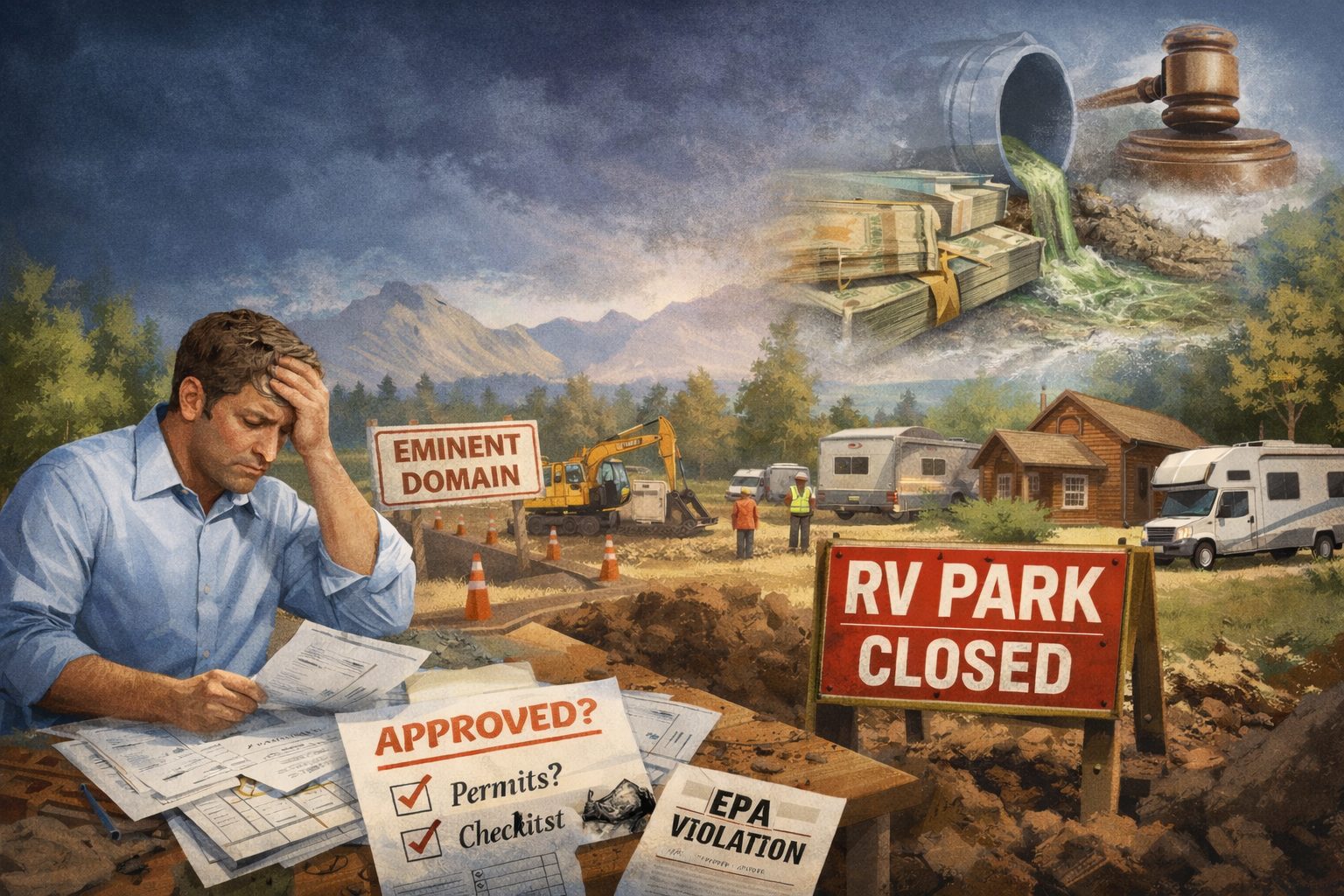
Eminent domain forces a newly built KOA to sell to the Florida Department of Transportation (FDOT) just months after opening, for a fraction of its potential. Or you get forced into an expensive upgrade because what was “in compliance” suddenly is not. Or you line up contractors and equipment, ready to put a shovel in the ground, only to find out that approvals do not mean you have permits.
This isn’t a theoretical exercise or a one-off scenario. It’s the reality behind stories from campgrounds in Florida, Utah, Ohio, New Jersey – and many other states. These outcomes are inconvenient at best, catastrophic at worst. In every case, the fatal flaw was a single critical item missed during due diligence.
As a consultant, designer, and operator, versions of this story have been experienced time and time again. The common thread is rarely a lack of vision, hard work, or capital. It’s a failure in the investigative phase – due diligence that simply wasn’t diligent enough. A lender may fund the deal, the municipality may offer early encouragement, and the seller may seem forthcoming. But in our industry, where many properties are older, built under previous codes, and operated with informal “this is how we’ve always done it” logic, gaps are easy to miss and expensive to fix.
The primary job for any investor, developer, or buyer is to prove the campground is legal, and mechanically and physically fit, before ownership changes or the first shovel hits the dirt.
The High Cost of “Good Enough” Paperwork
The allure of a fully licensed, “grandfathered” park with a high site count is powerful. It can also be a dangerous illusion.
Witnessed firsthand with a park in Utah. The business license and site map clearly showed 103 RV sites. The park had operated that way for years. The financial model was built on that density. Yet those 103 sites were non-conforming to the underlying zoning.
The proof was in the planning department archives. The original recorded plats and approvals documented just over 80 sites. The “grandfathered” status lived in a gray area – tolerated but never formally reconciled.
The issue stayed dormant until the new owner tried to add cabins, a logical move to boost revenue. The municipality saw an opportunity, using the request for new improvements as leverage to force a reconciliation of the old non-conforming use. The result was a mandate for a complete as-built survey, extensive utility mapping, and significant expense to legitimize what the owner believed they already owned.
This scenario underscores a distinction learned the hard way during an expansion in New Jersey: zoning approval does not equal development approval.
The zoning was right, changed specifically to allow a campground on the parcel and was written into the township’s general plan. The mayor actively supported the development and pushed it through the town’s process. We proceeded with confidence.
But land use and zoning approval turned out not to be project approval. The final development permit required planning board approval and that had not been issued.
This single gap ignited a year-long legal battle, freezing development and consuming a small fortune in legal fees. The lesson was seared: every assumption must be verified, in writing, and properly recorded with the municipality.
A professional, forensic review of the document trail – deeds, restrictions, easements, old permits, health department records – is not an “extra.” It’s the cheapest insurance most buyers will ever purchase.
What Lies Beneath: When the Ground Itself Holds Liabilities
Be prepared to dig into the ground in addition to digging into the files.
The romantic image of a park built decades ago often belies a terrifying reality: undocumented, non-compliant, or silently failing infrastructure. A property visit where a routine visual inspection of sewer lines showed no obvious issues. There were no prior violations from the regulating authority. Everything looked fine.
Then a standard dye test – a fundamental tool in a proper due diligence process – revealed the truth. A row of RV sites was discharging directly into a protected creek. The potential EPA fines and remediation costs were staggering, an existential threat to the business. The previous owner either didn’t know or didn’t disclose it. The cost of the test that revealed the problem was trivial.
This is the physical counterpart to the paper audit, and it is equally important. Electrical systems, water lines, and septic fields in older parks were not built for today’s high-amperage rigs or modern environmental standards. Assuming infrastructure is “fine because it works” is one of the biggest gambles a buyer can make.
Due diligence should include performance testing and capacity analysis by qualified engineers. You’re not just buying land. You’re buying a miniature, aging city. You need to know the state of its unseen foundations.
Building the Wrong “Right” Park: The Wrong Expert
Sometimes due diligence fails not because you missed a permit, but because you never pressure-tested the business model with the right kind of expertise.
A sophisticated developer hired top-tier architects and a renowned hospitality consultant. No corners were cut. The result was a beautifully constructed 250+ site park with 90 accommodations. On paper it was a stunning destination resort.
Yet the resort struggled to meet its financial projections.
Why? The development team, while experts in their respective fields, lacked specific RV park and campground operational experience. They applied a generic “destination resort” template without understanding the unique behaviors of camping guests.
The flaws were baked into the design. The largest, most premium RV sites were only 56-foot deluxe pull-throughs, yet the industry standard had shifted to 65+ feet to accommodate today’s larger rigs. The premium product was already functionally obsolete for a significant segment of the market.
Their consultant assumed guests would dine on-property the way they might at a remote hotel or resort. But the park was adjacent to a major theme park. Campers drive a fully stocked kitchen through the front gate. They were competing for dining dollars in a market where guests prioritize theme park time and often prefer their own meals. The resulting restaurant was significantly oversized, and the commercial kitchen placed in the basement crippled operational efficiency and created unnecessary overhead.
The developer did a lot “right” by hiring experienced professionals and investing heavily. The problem was that they hired experts in the wrong industry.
The due diligence failure was not validating the core business model and site design with someone who has demonstrable RV park and campground expertise. Before finalizing plans, the concept should be vetted by someone who understands not just construction cost, but site revenue potential, guest flow, amenity utilization, operations and evolving standards of the camping industry. This is the operational design review.
It is the difference between building a beautiful resort and building a profitable, functional RV park.
Due Diligence Is Not a Series of Disconnected Reports
Due diligence fees can feel expensive and are hard to swallow. They usually pay for themselves after the fact, once you discover what you didn’t know. Compare those upfront costs to the outcomes above: the total loss to eminent domain, the six-figure retrofit to reconcile site count, the existential environmental fine, or the multi-million-dollar resort built to the wrong specs.
ROI is not only measured in revenue gained. It is also measured in catastrophe avoided.
Local experts – attorneys, engineers, planners – are essential. But our industry speaks a unique language. A land-use attorney can interpret zoning code but may not understand the revenue implications of a non-conforming site count. A civil engineer understands hydrology but may not fully grasp the practical flow of a campground’s sewer system on a peak Saturday night or checkout Sunday.
Many professionals routinely build subdivisions, shopping centers, and office buildings. An RV park might be a once-in-a-career project for them. That can leave them confident in their skills, but with a gap in RV Park operational reality.
This is the core of diligent due diligence. It is not a stack of separate reports. It is a unified investigation led by a person or firm who can translate operational reality into technical questions, and technical findings back into business risk.
A capable guide – an experienced consultant, a veteran operator, or a specialized firm – ensures the legal review asks about “grandfathering” in the context of future expansion. They task the engineer with testing for failures that are unique to high-turnover, transient sites. They pressure-test the site plan against the evolving needs of today’s RVer.
The ultimate deliverable is not a checklist. It is a clear-eyed answer to the only question that matters: What is the real business I am buying or building, how should it operate, and what is the full cost of making it viable and compliant?
The Goal: Clarity, Not Killing Deals
It is impossible to eliminate all risk or guarantee a problem-free ownership cycle. But risk can be radically reduced with professional skepticism. The goal is to understand every positive and every negative related to the project and then make a truly educated decision.
The best defense for a buyer, operator, or developer is building a due diligence team of skeptics with legal, local, and industry expertise. Rigorous due diligence is not meant to kill deals. It is meant to help deals move forward with clarity and confidence. It transforms frightening unknowns into managed, budgeted line items.
In a business where so much is built on reputation and curb appeal, remember that even the most stunning campground or resort can be sitting on a foundation of non-conforming use and buried mistakes. Let someone else learn that lesson the hard way. Your job is to be smarter, to be skeptical, and to get the help that ensures your acquisition, expansion, or development has a solid foundation in every sense of the word.
About Campground Consulting Group
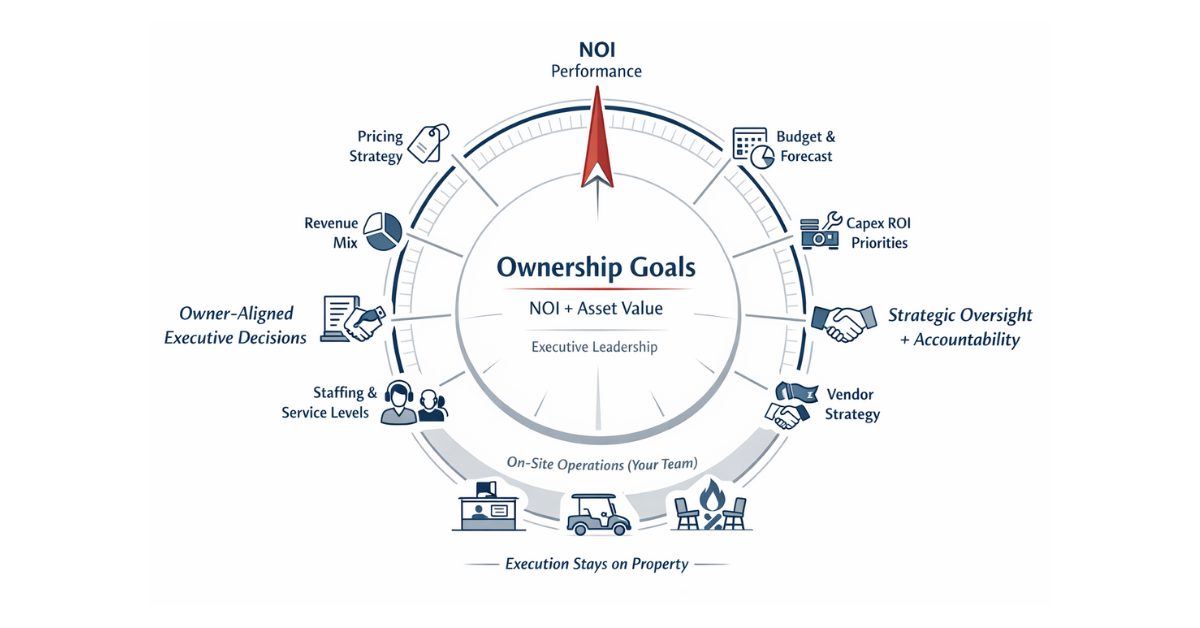
Campground Consulting Group (CCG) helps RV park and campground owners, investors, and developers make better decisions across the full lifecycle of a project – from feasibility and investment guidance to design, development, operations, and marketing. Our team brings decades of hands-on outdoor hospitality experience, with a focus on practical execution and risk reduction. One of our senior leaders, Erik Gothberg, is a longtime outdoor hospitality executive with more than two decades of experience in RV resort and campground operations and development, bringing ownership-aligned, executive-level decision making to property performance – including rate and revenue strategy, revenue-mix optimization, budgeting and financial oversight, staffing and service-level planning, vendor and partner negotiations, and ROI-based capital prioritization. His background includes senior leadership roles at Sun Communities and Kampgrounds of America (KOA), where he oversaw multi-state resort portfolios and development initiatives.

Must Read